
Download the Mortgage Compliance Audit Checklist
Get a practical guide designed to help mortgage professionals strengthen loan file quality control, improve AML and BSA documentation readiness, and reduce avoidable compliance risk.
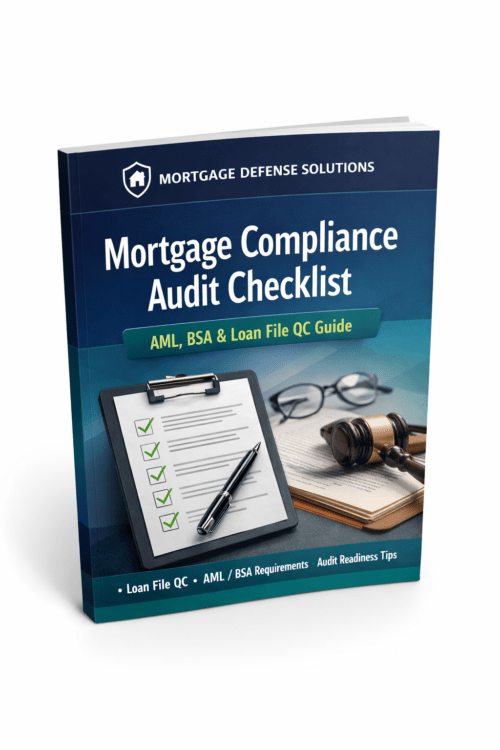
What you’ll get in this complimentary checklist
This downloadable resource is built for mortgage brokers, lenders, compliance officers, and operations leaders who want a more structured, defensible process for mortgage compliance review.
- A practical loan file quality control checklist to help review required documentation, disclosures, and common compliance checkpoints.
- An organized AML / BSA compliance framework based on the structure commonly used in independent third-party compliance reviews.
- A simple way to identify gaps in documentation, policies, oversight, and internal process consistency.
- A resource you can use to support internal reviews, staff alignment, and audit readiness planning.
Who should download this?
This guide is ideal for mortgage companies that want to tighten their internal controls, reduce exposure to documentation errors, and improve confidence ahead of investor reviews, regulatory examinations, or internal compliance audits.
Why Mortgage Defense Solutions?
Mortgage Defense Solutions helps mortgage organizations evaluate risk, improve compliance workflows, and build stronger documentation practices that support long-term operational stability.
Complete the form below to access the checklist
Enter your email below and you’ll be able to download the Mortgage Compliance Audit Checklist.
Need more than a checklist?
Mortgage Defense Solutions also provides deeper compliance support for mortgage organizations that need help evaluating risk exposure, improving documentation practices, and preparing for more rigorous review.
Mortgage Compliance Audit Checklist: What It Covers
A mortgage compliance audit checklist is a structured tool used by lenders, brokers, and compliance teams to review loan files, verify required disclosures, and evaluate adherence to regulatory requirements.
This checklist focuses on the core areas that regulators, investors, and internal audit teams commonly review when evaluating mortgage operations.
- Loan file documentation accuracy: ensuring required borrower documents, disclosures, and supporting materials are complete and properly executed.
- Regulatory compliance alignment: reviewing adherence to federal and state-level requirements including disclosure timing and content.
- AML and BSA procedures: confirming identity verification, due diligence, and documentation processes are consistently followed.
- Internal process consistency: identifying gaps between documented policies and actual operational practices.
- Audit readiness: preparing documentation and processes to withstand investor reviews and regulatory examinations.
Mortgage Compliance Audit Checklist FAQs
What is a mortgage compliance audit checklist?
A mortgage compliance audit checklist is a structured list of required documents, disclosures, and procedures used to review loan files and ensure adherence to regulatory and internal standards.
Who uses mortgage compliance checklists?
Mortgage brokers, lenders, compliance officers, quality control teams, and internal auditors use compliance checklists to evaluate loan files and operational processes.
What does a mortgage audit typically review?
Mortgage audits commonly review borrower documentation, disclosure compliance, loan file accuracy, AML procedures, and adherence to internal policies and regulatory requirements.
How often should mortgage compliance audits be performed?
Many organizations conduct ongoing quality control reviews, with periodic internal audits and additional reviews in preparation for investor or regulatory examinations.
Why Mortgage Compliance Audit Checklists Are Critical
Even small documentation errors or inconsistencies in mortgage files can lead to significant issues during audits, including findings, delays, or increased scrutiny from regulators and investors.
- Reduce the risk of missing or incomplete disclosures
- Improve consistency across loan files and operational teams
- Identify compliance gaps before they become regulatory issues
- Support internal quality control and audit preparation efforts
- Strengthen overall confidence in your compliance processes